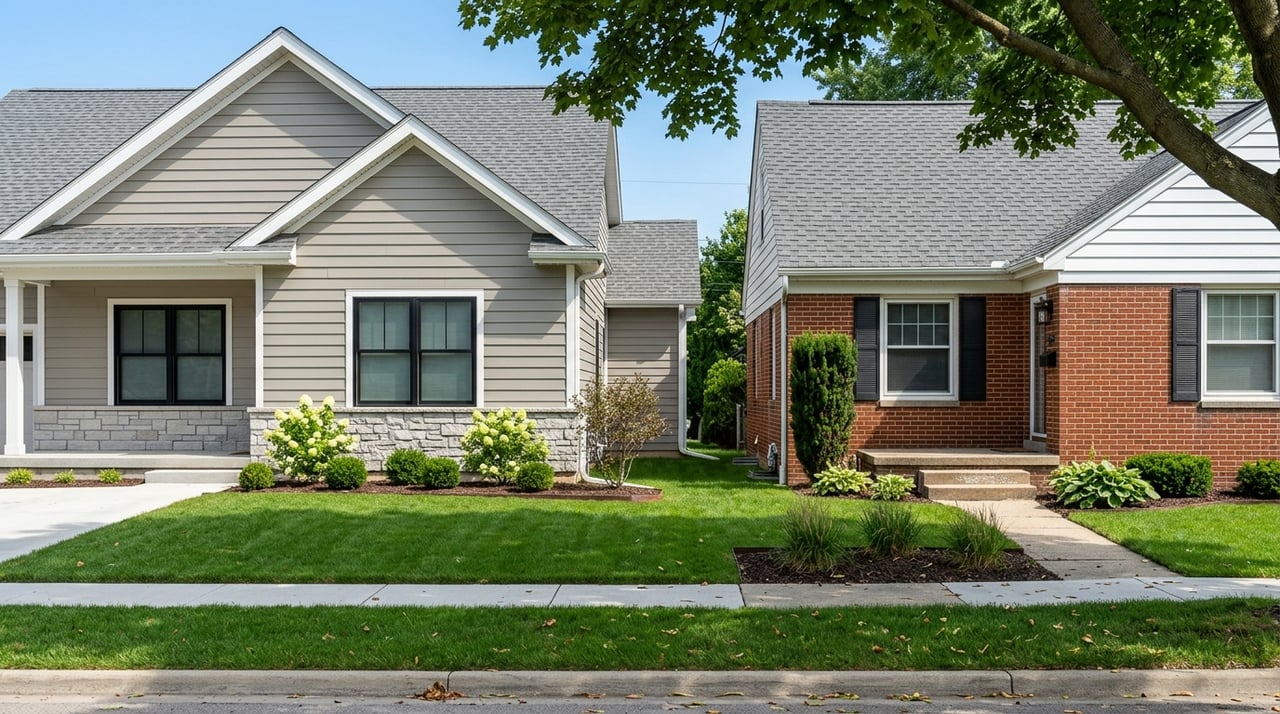
Wondering whether you should build new or buy an existing home in Byron Center? You are not alone. With a healthy mix of established neighborhoods and active new-home development, this market gives buyers real options, but each path comes with different costs, timelines, and trade-offs. This guide will help you compare both choices so you can move forward with more clarity and confidence. Let’s dive in.
Why Byron Center Gives You Both Options
Byron Center offers a useful mix of older housing areas and newer development zones. According to the U.S. Census QuickFacts for Byron Center, the community had a 2020 population of 7,431, a median household income of $122,553, and an average household size of 3.05.
That owner-occupant profile lines up with what you see on the ground. The Byron Township Master Plan describes a historic downtown village center with established single-family homes on modest lots, while newer growth is concentrated near 84th Street, US-131, and M-6 where larger undeveloped parcels remain.
In other words, you are often choosing between two different living experiences. One may offer a more settled street pattern and mature surroundings, while the other may offer newer homes, newer infrastructure, and more opportunities to personalize the property.
Byron Center Market Snapshot
Current listing data shows that buyers have meaningful inventory to compare. Realtor.com market data for Byron Center reports 178 homes for sale, a median listing price of $524.5K, and a median of 44 days on market.
That same source shows a substantial new-build segment. Byron Center had 106 new-construction homes for sale at a median listing price of $459K and a median of 35 days on market.
Price range matters too. Current Byron Center new-home listings on Zillow span roughly from the low $300Ks to the high $800Ks, which shows that new construction here is not limited to one type of buyer or one price point.
Why Buyers Choose New Construction
If you want a home that feels more tailored to your preferences, new construction can be appealing. Some local communities offer customizable layouts, finishes, and homesites. For example, Eastbrook’s Walnut Ridge community highlights customizable single-family homes, green space, walking paths, and a playground.
New homes also tend to offer newer systems and materials from day one. That can reduce some of the maintenance uncertainty that often comes with an older property, especially in the first few years of ownership.
Another reason buyers like new construction is warranty coverage. The Federal Trade Commission’s guidance on new-home warranties notes that newly built homes may include builder or third-party warranties, and FHA and VA loans require third-party warranties on newly built homes.
Energy performance can also be part of the appeal. The FTC notes that warranty-backed new homes may come with specific protections, and it references how certified new homes are designed for better efficiency and performance. That can matter if you are trying to manage monthly ownership costs over time.
New Construction Pros
- More opportunities for customization
- Newer systems, finishes, and materials
- Potentially lower early repair risk
- Warranty coverage may help reduce some first-year unknowns
- Often located in newer development corridors with fresh inventory
What to Watch With New Construction
The biggest trade-off with a new build is usually time. Buying an existing home is often faster because the home is already complete. New construction typically involves permits, utility approvals, site work, inspections, and final occupancy steps.
The Byron Township building checklist shows just how phase-driven the process can be. Requirements include a site plan, floor plans and elevations, builder’s license, water and sewer permits, driveway permits, energy calculations, and inspections before occupancy.
That does not mean new construction is a bad choice. It simply means you should be comfortable with a longer and more variable timeline, especially if weather, materials, or inspections affect progress.
You should also read the warranty details carefully. The FTC explains that warranties often do not cover everything, including many appliances, small cosmetic issues, or living expenses if you need to move out during repairs.
New Construction Trade-Offs
- Longer timeline than many resale purchases
- More moving parts before closing and occupancy
- Delays can happen during permitting or construction
- Warranties have limits and exclusions
- You may still need to budget for upgrades beyond the base price
Why Buyers Choose Existing Homes
Existing homes often appeal to buyers who want a more established setting and a shorter road to move-in. In Byron Center, that frequently means homes connected to the township’s more historic and settled areas, especially near the downtown village center described in the township master plan.
For some buyers, that mature neighborhood feel matters just as much as the house itself. The lot sizes, street patterns, and overall setting can feel more rooted and less under development.
A resale home can also give you more immediate clarity. What you see is generally what you get. Instead of choosing from plans, samples, or unfinished spaces, you can evaluate the actual layout, condition, and features before making a final decision.
Another benefit is speed. If timing matters because of a lease ending, a job relocation, or a sale deadline, an existing home may give you a faster path to possession than a build from the ground up.
Existing Home Pros
- Faster possession in many cases
- Established neighborhoods and mature surroundings
- Easier to evaluate the actual home before closing
- More room to inspect, negotiate, and update over time
- Renovation timing is usually on your schedule after purchase
What to Watch With Existing Homes
The trade-off with an existing home is condition variability. Two homes with similar prices can have very different maintenance histories, system ages, and update needs.
That is why inspections matter. The Consumer Financial Protection Bureau recommends scheduling an independent home inspection as soon as possible so you can learn about major issues, negotiate repairs or credits, or cancel if your contract allows.
In practical terms, resale homes may shift more of the near-term repair or update burden to you. You might gain move-in speed, but you also need to budget for maintenance, improvements, or replacements depending on the property.
Existing Home Trade-Offs
- More variation in condition from one home to another
- Higher chance of near-term maintenance or repair costs
- Older finishes or systems may need updates
- Inspection findings can affect budget and negotiations
How to Compare Total Cost
The right choice is not always the one with the lower list price. A smart comparison looks at your total monthly cost and your expected first few years of ownership.
For new construction, that may include upgrade selections, landscaping, or features not included in the base price. For existing homes, that may include repairs, replacements, or remodeling projects after closing.
Taxes are another major factor in Michigan. The Michigan Department of Treasury explains that a transfer of ownership causes taxable value to uncap in the calendar year following the transfer. That means the seller’s current property tax bill is not a reliable estimate of what you may pay after purchase.
This matters whether you buy new or resale. If you want a realistic budget, it is important to look beyond the current listing sheet and estimate what ownership may cost after closing.
Which Option Fits Your Priorities?
If your top priorities are customization, newer systems, and lower early repair uncertainty, new construction may be the better fit. This path tends to work best if you are comfortable waiting through permits, site work, inspections, and completion.
If your priorities are faster move-in, established surroundings, and the ability to inspect a home before you buy it, an existing home may make more sense. This option can also appeal to buyers who want to renovate on their own timeline rather than making every choice upfront.
The good news is that Byron Center supports both strategies. With meaningful new-build inventory and a solid supply of existing homes, you have real flexibility to match the market to your goals.
A Practical Way to Decide
If you are torn between the two, start with three questions:
- How soon do you need to move? If your timeline is tight, resale may be easier.
- How much uncertainty can you tolerate? New builds often reduce early repair surprises, while existing homes reduce construction and timeline uncertainty.
- Where do you want to spend your money? You may prefer paying for personalization upfront, or you may prefer buying an existing home and making improvements gradually.
When you compare homes this way, the decision often becomes clearer. It stops being about which option is better in general and starts being about which option fits your life better right now.
Whether you are leaning toward a brand-new build or an established home in Byron Center, having local guidance can help you compare timelines, costs, and trade-offs with less stress. If you want a tailored plan for your move, connect with Bryan Anderson Real Estate for personalized buyer guidance in Byron Center and the surrounding West Michigan market.
FAQs
How long does new construction usually take in Byron Center?
- New construction usually takes longer than buying a resale home because Byron Township requires steps like permits, site plans, utility approvals, driveway permits, inspections, and occupancy sign-off.
Should you get an inspection on a new construction home in Byron Center?
- Yes. An independent inspection is still a smart step because new-home warranties do not cover everything, and the CFPB recommends scheduling an inspection as soon as possible during a home purchase.
Are new construction homes in Byron Center all in the same price range?
- No. Current new-home listings in Byron Center range from about the low $300Ks to the high $800Ks, so there is meaningful variation in price and product type.
Are existing homes in Byron Center better for faster move-in?
- Often, yes. Existing homes are typically better if you want a shorter path to possession because the home is already built and available to inspect before closing.
Why can property taxes change after buying a home in Michigan?
- In Michigan, a transfer of ownership can cause taxable value to uncap in the following calendar year, so the seller’s current tax bill may be lower than what you pay after closing.